
St Julien Washhouse
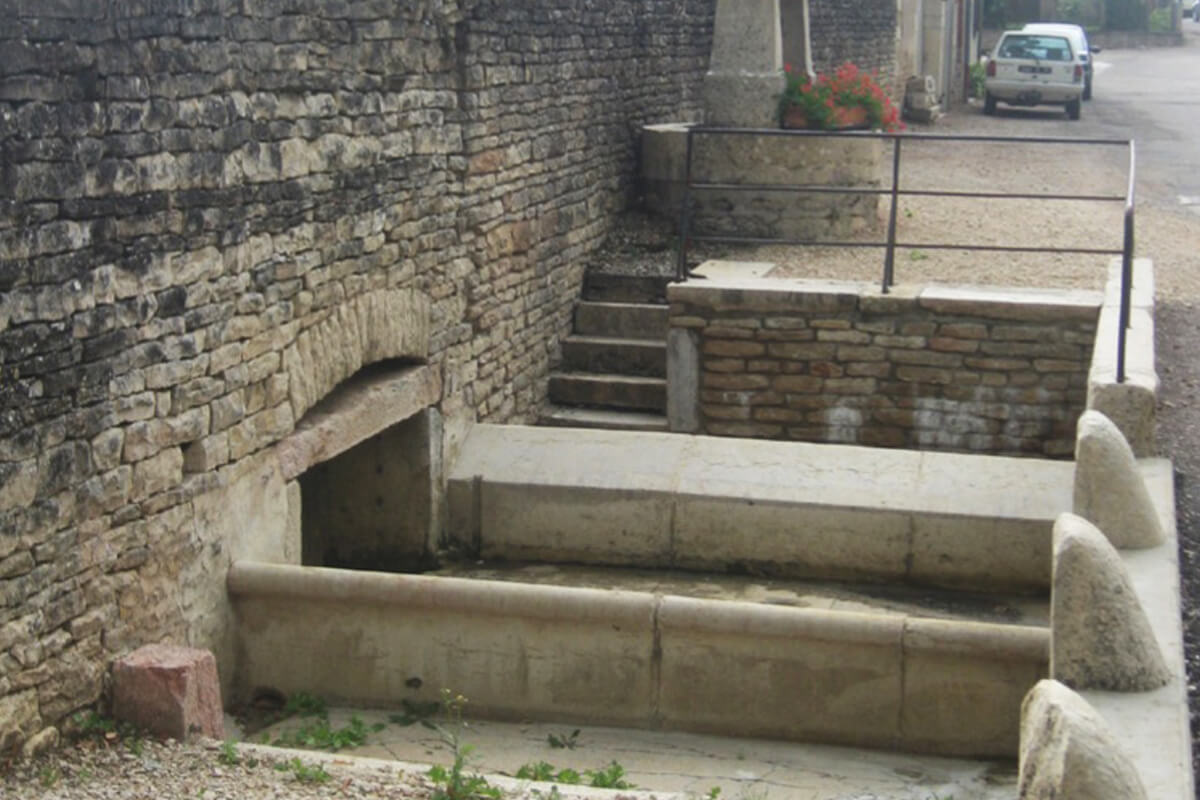
Saint-Julien Washhouse is a 19th-century village washhouse built of local limestone, featuring a stone basin fed by a natural spring. Its flowing water system and traditional tiled roof made it an essential communal place for washing clothes and village social life.
Saint-Julien Washhouse is a traditional 19th-century washhouse typical of rural Burgundy. Built with sturdy local limestone and protected by a roof of flat Burgundy tiles, it shelters a large stone basin supplied by a continuous spring flow, ensuring clean water for washing. The angled stone slabs around the basin were used by women who gathered here for laundry and community exchange. Designed for hygiene and practicality, the lavoir reflects both local craftsmanship and the social life of the village before modern water systems existed.
Gallery of St Julien Washhouse
Geographical location of St Julien Washhouse
St Julien Well
St Julien Well is a 19th-century stone well near the parish church, built with a monolithic rim and stone pilasters. Once serving the nearby washhouse.
Town Hall Pump
Town Hall Pump is a late-19th-century cast-iron manual water pump placed beside the town hall. Once vital for daily water needs, it now serves as a charming heritage feature decorated with flowers in its stone basin.
Old Mill Fountain
Old Mill Fountain is a square stone fountain, topped with a four-sided tiled roof supported by wooden posts. It feeds a nearby washhouse via a stone channel.